


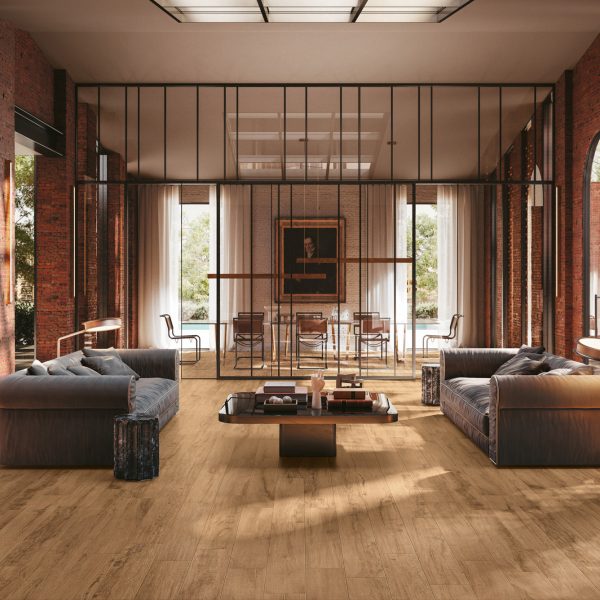
Why Wood-Look Tiles Bring Warmth to a Room
-
Wood-look tiles mimic the natural grain, texture, and tones of real wood, giving you that cozy, organic feel. (Tile Warehouse)
-
Unlike real wood, tile is moisture-resistant, durable, and easier to maintain — so you get beauty + performance. (prime.vn)
-
Tiles retain heat reasonably well and pair nicely with underfloor heating, helping the space feel warm even in cooler climates. (prime.vn)
Design Strategies to Maximize Warmth with Wood-Look Tiles
-
Choose Warm Tones
-
Opt for wood-look tiles in warm wood species like honey oak, walnut, or chestnut. (Mineral Tiles)
-
These tones naturally feel more inviting than very pale or very grey “wood” tiles. (Tile Warehouse)
-
-
Go for Texture
-
Use matte or lightly textured finishes instead of glossy — they feel more natural and soft. (Tile Warehouse)
-
Consider hand-scraped or distressed wood-look tiles to give more character and warmth. (digitalassets.daltile.com)
-
-
Mix with Other Materials
-
Combine wood-look tiles with natural textures: woven rugs, wool throws, rattan furniture. (saranatile.com)
-
Pair them with stone or marble surfaces to contrast smooth textures while keeping the color palette grounded. (Coohom)
-
-
Use Vertical Applications
-
Don’t limit the tiles to the floor. Use wood-look tile on accent walls, fireplace surrounds, or even in bathrooms. (Edward Martin)
-
On walls, lighter-toned planks reflect more light, which makes the space feel brighter and warmer. (Edward Martin)
-
-
Lighting Matters
-
Use warm light bulbs (2700K–3000K) to highlight the wood tones and enhance coziness. (Designer Cheatsheet)
-
Layer lighting: mix ambient light with task lighting and accent lighting to soften the feel of the room. (Designer Cheatsheet)
-
-
Add Soft Furnishings
-
Place area rugs, throw pillows, and blankets in neutral or earthy colors (beige, terracotta, soft browns) to complement the tile. (onlineshop.rakceramics.com)
-
Use natural-fiber textiles (wool, linen, cotton) to reinforce the organic warmth of the space. (Homes and Gardens)
-
-
Consider the Tile Layout
-
Lay wood-look tiles in a staggered plank pattern for more of a natural wood-floor feel.
-
For more visual interest, use herringbone or chevron patterns. These add depth without feeling cold. (Tile Warehouse)
-
Use narrow grout lines (or match the grout to the tile tone) to minimize the “tile” look and maintain the illusion of real wood. (Reddit)
-
Room-Specific Applications & Ideas
-
Living Room: Use warm-toned wood-look tiles as the main flooring. Add a soft wool rug in the seating area + warm ambient lighting.
-
Bedroom: Use a chevron or herringbone wood-look tile pattern to make the floor feel more crafted; layer with plush textiles.
-
Bathroom: Cover both the floor and lower walls with light wood-look tile to create a spa-like feel. Use plants and natural-fiber accessories to soften the space. (onlineshop.rakceramics.com)
-
Kitchen: Choose plank-style wood-look tile for the floor; pair with warm-toned cabinets or natural stone countertops.
Design Mistakes to Avoid
-
Avoid overly grey or ashy tile if your goal is warmth — those tones can feel cold.
-
Too much metal / chrome: Metal accents can clash with the natural feel of wood-look tile if overdone; try mixing in warmer metals or natural finishes. (saranatile.com)
-
Wrong lighting: Using cool, blue-toned lighting can make the room feel sterile, even with warm tile.
-
Ignoring grout color: High contrast grout (e.g., very light grout with dark tile) breaks up the look and reduces warmth.
Why This Works
-
Wood-look tiles give you the look and feel of wood without the maintenance drawbacks. (prime.vn)
-
The texture and natural color variation of wood-grain tile help anchor the room and make it feel grounded and comforting.
-
When balanced with soft textiles, warm lighting, and natural accents, the overall effect is cozy, inviting, and timeless.


